

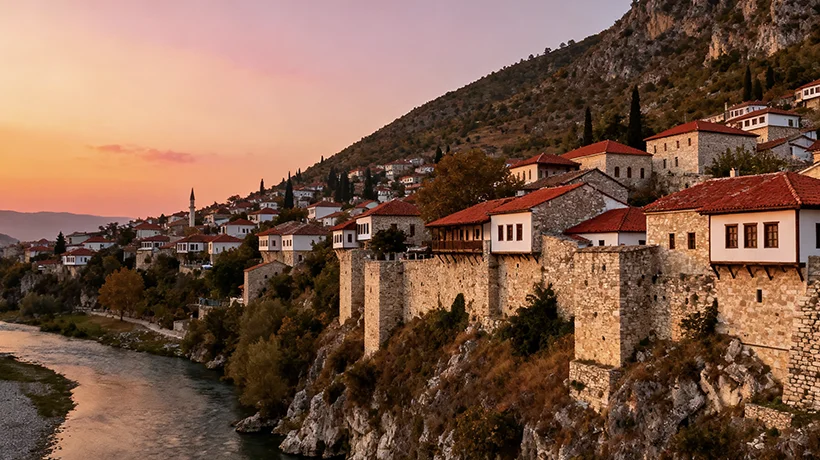
Some destinations are beautiful. Others have history. Berat and Gjirokastër have both – plus authentic culture largely untouched by mass tourism.
These two UNESCO World Heritage Sites represent the heart of Albanian Ottoman heritage. Berat, known as the “City of 1000 Windows,” features white stone houses cascading down hillsides. Gjirokastër, the “City of Stone,” showcases fortress architecture and cultural traditions centuries old.
Together, they create a road trip opportunity unmatched in the Balkans: exploring authentic medieval/Ottoman towns without the crowds of Croatian Dubrovnik or Greek equivalents. You’ll walk cobblestone streets where locals actually live, eat at family-run restaurants serving traditional dishes, and experience Albania’s cultural heritage in its most concentrated form.
This guide covers the history that makes these sites significant, the cultural sites worth visiting, the best restaurants for authentic dining, and a complete 3-4 day itinerary combining both UNESCO sites with surrounding cultural attractions.
Understanding Berat & Gjirokastër: History, Culture & Significance
Berat: “The City of 1000 Windows”
Founded in the 13th century, Berat served as Ottoman administrative center for centuries. The distinctive architecture – white stone houses with rows of small windows – earned its nickname. These windows were designed to allow women privacy while maintaining interior light.
UNESCO Recognition: Inscribed 2008 as outstanding example of Ottoman-era urban planning and architecture.
Gjirokastër: “The City of Stone”
Perched on steep hillside, Gjirokastër developed around fortress protection. Stone buildings (no white paint like Berat) create different aesthetic. The town maintains strong traditions, including recognized UNESCO Intangible Cultural Heritage designation.
UNESCO Recognition: Inscribed 2005 for exceptional preservation of Ottoman-era town and fortress architecture.
Cultural Significance:
Both cities represent pre-Ottoman (Byzantine/Medieval) AND Ottoman cultural layers. You’re literally walking through history – streets unchanged for centuries, architectural styles showing cultural evolution.
Unlike many European “restored” medieval towns, Berat and Gjirokastër remain living communities. Local families inhabit these ancient homes, businesses operate in historic buildings, traditions continue naturally rather than for tourists.
Why Visit These Cities?
✓ Genuine Ottoman cultural preservation
✓ Minimal tourism infrastructure (still authentic)
✓ UNESCO recognition ensures quality preservation
✓ Photographic opportunities unmatched
✓ Cultural experiences unavailable elsewhere
Berat Complete Visitor Guide: Sites, Culture & Practical Info
Geography & Layout:
Berat divides into three sections:
1. Old Bazaar (Lower Town)
Commercial center with shops, restaurants, small mosques. Where local life concentrates today. Less architecturally spectacular than upper districts but authentic.
2. Mangalemi District (Left Bank)
Primary tourist area. Stunning white houses. Museum-like atmosphere. Beautiful but packaged for tourism.
3. Gorica District (Right Bank)
Residential, fewer tourists, more authentic daily life. Worth exploring for authentic atmosphere.
Must-See Cultural Sites:
→ Berat Castle: Fortress overlooking city, Ottoman-era renovation, modest entrance fee (€2-3)
→ Onufri Museum: Iconic Albanian religious artwork (€2)
→ King Mosque: Functioning mosque, open to visitors (respectful attire required)
→ Old Bazaar: Walking exploration, traditional shops, local restaurants
Best Restaurants:
→ Vatra Restaurant: Traditional cuisine, rooftop views, €8-15 main dishes
→ Felicita Restaurants: Multiple locations, family-run, excellent food
→ Tradita Restaurant: Historic building, authentic atmosphere, €10-18 mains
Practical Visiting Information:
Best time to visit: May-June, September-October (good weather, fewer tourists than July-August)
How long to stay: 1-2 days minimum (1 day rushing, 2 days ideal)
Accommodation: €25-40/night budget hotels, €50-80/night guesthouses (book in advance July-August)
Transport: Buses from Tirana (2 hours, €3-5), or rent car for flexibility
GPS Coordinates for Key Sites:
- Berat Castle: 40.7082°N, 19.9543°E
- Onufri Museum: 40.7095°N, 19.9536°E
- Mangalemi District Center: 40.7088°N, 19.9528°E
Gjirokastër Visitor Guide: Fortress, Culture & Local Experience
Geography & Character:
Gjirokastër feels different from Berat. Steeper hillside positioning creates dramatic fortress appearance. Stone buildings (unpainted) create austere aesthetic. Fewer tourists than Berat = more authentic local culture.
Must-See Sites:
→ Gjirokastër Fortress: Massive fortress overlooking city, €3-5 entry, worth the climb
→ Ethnographic Museum: House museum showing traditional living arrangements (€2)
→ War Museum: Cold War-era weapons display, interesting historical context (€2)
→ Old Bazaar: Similar to Berat, functional marketplace, authentic atmosphere
Unique Gjirokastër Feature:
National Folklore Festival (early September): If visiting during festival, witness traditional singing, dancing, costume displays. Unique cultural experience. Book accommodation early.
Best Restaurants:
→ Traditional Taverna: Home cooking in historic building, €8-14 mains
→ Castle Restaurant: Panoramic views, traditional dishes, €10-16 mains
→ Old Bazaar Cafes: Casual, local atmosphere, €3-7 quick meals
Photography Tips:
Gjirokastër offers dramatic photography:
✓ Fortress looming over city (shoot from lower town)
✓ Hillside architecture layers (shoot morning/evening light)
✓ Narrow stone streets (close-up cultural shots)
✓ Sunset from fortress overlooking valley
Practical Information:
Best time: May-June, September (avoid peak crowds and temperature extremes)
Duration: 1-2 days
Accommodation: €25-35/night budget, €45-70/night guesthouses
Transport: Buses from Tirana (3.5 hours, €5-7), better as car rental for flexibility
GPS Coordinates:
- Fortress: 40.2127°N, 20.1397°E
- Old Bazaar: 40.2137°N, 20.1378°E
3-Day Berat & Gjirokastër UNESCO Road Trip
Day 1: Tirana to Berat (2 hours)
- Drive from Tirana southward
- Arrive Berat early afternoon
- Explore Old Bazaar and lower town
- Evening: Sunset from castle
- Overnight: Berat
Day 2: Full Day Berat
- Morning: Berat Castle exploration
- Afternoon: Mangalemi district walking tour
- Lunch: Traditional restaurant
- Explore Gorica district (local area)
- Evening: Dinner overlooking city
- Overnight: Berat
Day 3: Berat to Gjirokastër (2 hours)
- Morning: Final Berat exploration
- Drive to Gjirokastër
- Arrive early afternoon
- Explore Gjirokastër fortress and old town
- Evening: Dinner, fortress sunset views
- Overnight: Gjirokastër (or return Tirana)
Optional Day 4: Explore Blue Eye spring (Saranda area, 2 hours further south)
Total Driving: 4-6 hours over 3 days
Cost: €60-90 car rental + €100-150 food/accommodation
Conclusion
Berat and Gjirokastër represent authentic cultural preservation rarely found in modern Europe. These aren’t sanitized “restored villages” – they’re living communities maintaining centuries-old traditions.
Visiting these UNESCO sites creates genuine cultural understanding. You’ll eat traditional food, explore historic architecture, and experience Albanian heritage in its most concentrated form.
Ready to explore Albania’s cultural heartland? A rental vehicle provides flexibility to explore both UNESCO sites plus surrounding attractions like Blue Eye spring and traditional villages. TiRental offers unlimited mileage perfect for cultural road trips, plus free airport pickup.
Book Your Cultural Adventure Car Now
Questions about specific sites or cultural experiences? Contact us: +355 69 478 9157